AI Wisdom

Tag

LLM

7 articles tagged with “LLM”

A/B-testinga-starA2AACRadaptive-thinkingagent-observabilityagent-patternsagent-protocolsagent-securityagent-skillsagentsAGENTS.mdaggregationaiai-gatewayAI-SearchaksalertingAlertmanageralgorithmsAnthropicAnthropic-APIAPEapi-designapi-gatewayAPI-providersapi-versioningapimAPMapp-routerapp-serviceappsecarchitectureArizearm-templatesASP.NET-Coreaspnet-coreaspnetcoreassertion-functionsassertsasyncauditauthenticationauthorizationAutoGenautomationazureAzure-APIMazure-content-safetyazure-front-doorazure-functionsAzure-OpenAIazure-policyazure-storagebatch-APIbddbeam searchBedrockbenchmarksbest-practicesbfsbi-encoderbias-detectionbicepbinary-searchbranchingbstBundlercache-componentscachingcap-theoremcapability-taggingCapitalizecascadingcase-based-reasoningchain-of-thoughtchartschatbotcheckpointingchunkingCIci-cdci-optimizationcicdclass-decoratorClaudeClaude-CodeCLAUDE.mdclean-architecturecloudcloud-securitycloudeventscode-reviewCodexcoding-agentscompactioncomparisoncompilerOptionscompliancecomposeconcurrencyconcurrent-renderingconditional-typesconsistencyconsistent-hashingconstrained-generationconstraintsconsumer-drivencontainer-registrycontainerscontent-moderationcontent-safetycontextcontext-compressioncontext-engineeringcontext-windowcontract-testingconversational-agentsCopilotcosmos-dbcost-allocationcost-controlcost-optimizationcost-per-taskcost-performanceCoTcoveragecqrscross-sessioncsharpCursorcvecypress.d.tsdapperdashboardsdastdata-fetchingdatabasesdataloaderdatasetsddddecision-frameworkdeclaration-filesdecoratorsDeepEvalDefinitelyTypeddependency-injectiondependency-scanningdeployment-slotsdeploymentsdeprecationdesign-patternsdevopsdfsdijkstradiscriminated-unionsdistributed-tracingdistributivedockerDocker-HubdocumentationDORAdotnetdotnet-9drift-detectionDSPydurable-executiondynamic-discoverydynamic-programminge2e-testingedge AIef-coreef-core-9embeddingsengineeringenvironmentsepisodic-memoryerror-budgetevalsevaluationevent-drivenevent-gridevent-hubseventingexamplesexperience-replayexperimentalDecoratorsfactualityfail-fastfaithfulnessfeature-flagsfederationfew-shotfiberfine-tuningFinOpsflaky-testsflex-consumptionfrontendfunction-callinggarakGeminiGemmagen-ai-semantic-conventionsgenericsGHCRgitGitFlowGitHubgithub-actionsgoal-decompositiongolden-signalsGoogle-DeepMindGPTgpt-4oGPT-6GPUgrammargraphgraphqlGroqgroundingGroupChatgrpcguardrailshallucinationhallucination-detectionharmful-contentharness-engineeringhclhealth-checksheapHelmhookshotchocolateHPAhttphttp2http3hybridcacheiacICLidempotencyidentityimage-scanningin-context-learningincident-responseindexesinferinferenceinfrastructureinput-validationintegrationintegration-testinginteroperabilityintrosortinvariantisolationIstiojailbreakjestjoinsjotaiJSONJSON-modejsonbjwtk8skey-remappingkey-vaultkiotaknapsackknowledge-baseKQLkubernetesKV cacheLangChainLangfuseLangGraphLangSmithlanguagelatencyleast-agencylegacy-codeLinkerdlinqLlamallama.cppLLMLLM-as-judgeLLM-monitoringLLM-securityload-balancinglogginglong-running-agentslong-term-memorylost-in-the-middlelower-boundmanaged-identitymapped-typesmaterialized-viewsMCPmemoizationmemorymemory-consolidationmergemessage-queuemessagingmeta-promptingmetadatametricsmicroservicesmicrosoftminimal-apisMistralmockingmocksModel-Context-Protocolmodel-routingmodel-selectionmodel-servingmoderationmodule-augmentationmodule-resolutionmodulesmongodbmonitoringmonorepomswMTEBmTLSmulti-agentmulti-stage-buildsmulti-tenantmultimodalmvccnarrowingnetwork-securitynextjs-16Node16normalizationnosqloauthoauth2observabilityoffline-evalsoidcOmiton-callon-deviceonline-evalsopaopen-sourceopen-weightOpenAIOpenAI-APIopenapiOpenTelemetryOPROorchestrationOTELOutlinesoutput-formatoutput-validationOWASPP99paaspackage-exportspactpactflowpage-objectsPagerDutyparsingPartialpartitioningpathspattern-matchingperformancepersonal-AIpgvectorPhiPhoenixPickPIIPII-filteringpineconepipelineplanningplaywrightpluginspolicy-as-codepollypostgresqlpricingproductionproduction-monitoringprogressive-disclosureproject-referencesprompt-cachingprompt-designprompt-engineeringprompt-injectionprompt optimisationpromptfooprotobufpulumipythonQdrantqualityquality-gatesquality-scorequantizationqueuesRAGRAG-evaluationRAGASrate-limitingreactreact-19react-compilerreact-internalsreact-queryreact-server-componentsrealtimereasoningreasoning-effortRecordrecursionrecursive-typesred-blackred-green-refactorred teamingredisreflectionregression-testingrelease-managementreplanningresource-limitsResponses-APIrestreusable-workflowsrlsrolling-updatesruntime-safetysaga-patternsandboxingsastsbomscaleschemaschema-designschema-validationSDKsdlcsearchsecrets-managementsecuritysecurity-testingself-consistencyself-hostingSemantic-Kernelsemantic-similarityserializableserver-actionsserverlessservice-busservice-meshshardingshortest-pathsidecar-proxysignalrSKILL.mdSLISLMSLOslopsquattingsnapshot-testingsoftware-designsortingspec-driven-developmentspeculative-decodingspiessqlstabilitystate-graphstate-managementstreamingstreamsstrict-modestridestring-typesstructured-loggingstructured-outputstubssummarisationsupertestsupply-chainsystem-designtail-calltanstack-querytask-framingTC39tddtemplate-literalstemplatesterraformtest-architecturetest-doublestest-pyramidtestcontainerstestingtesting-patternstesting-strategythreat-modelingtoken-buckettoken-budgettoken-economicstoken-limittoken-maskingtoken-trackingtokenstokens-per-secondtool-callingtool-registrytool-usetopological-sortToTtoxicitytracingtrajectorytransactionstree-of-thoughttreestrietrunk-basedtsconfigTTFTtype-guardstype-narrowingtype-predicatestype-safe-routestype-systemtype-transformstypestypescriptunit-testingusage-metricsuser-feedbackutility-typesvalidationvalkeyvaluesvaultvector-dbvector-searchvector-storevendor-neutralverificationversion-controlversioningVertex-AIvisual-regressionvitestvLLMvoice-agentsvulnerabilitiesweaviateweb-apiweb-securityWebLLMwebsocketswindow-functionsWindsurfwiremockworkflowsworking-memoryworkload-identityworkspacesxunityarpzero-shotzero-trustzodzustand
AI Engineering
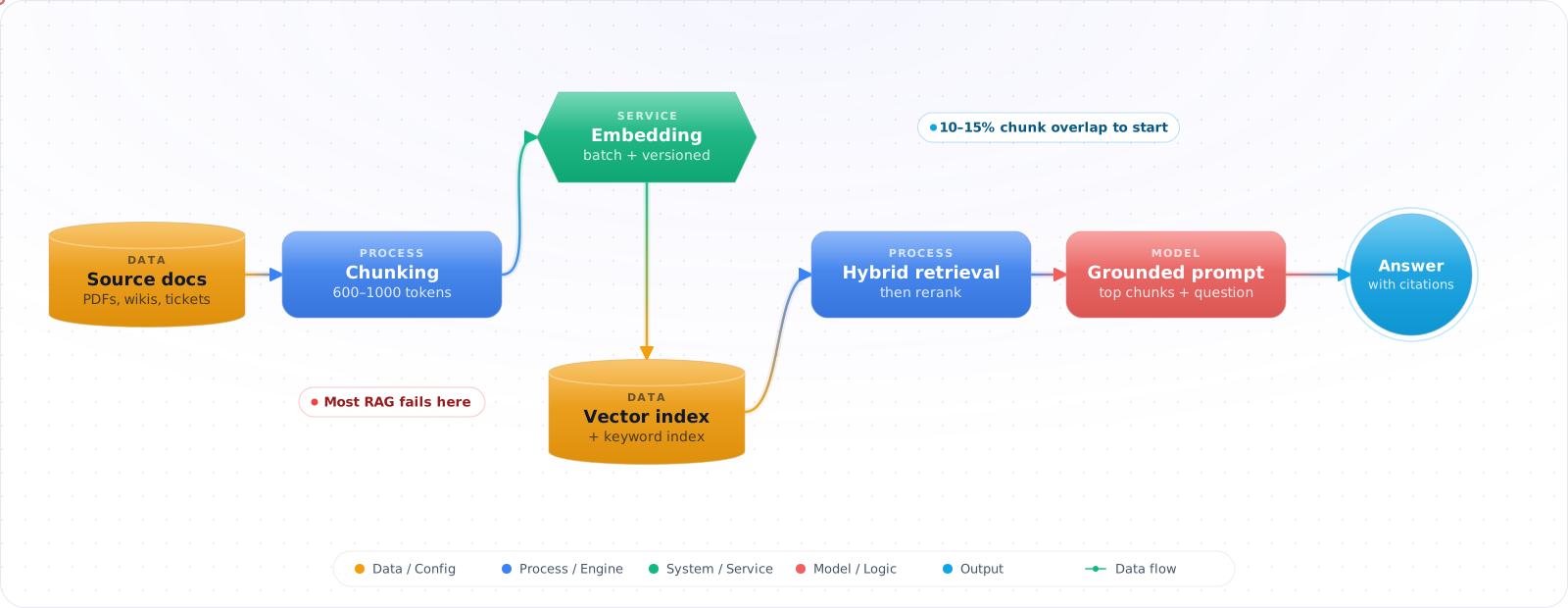
A production RAG pipeline: documents are chunked at 600 to 1000 tokens with overlap, embedded into a vector index, retrieved with hybrid search and reranking, and assembled into a grounded prompt for the LLM.A production RAG pipeline: documents are chunked at 600 to 1000 tokens with overlap, embedded into a vector index, retrieved with hybrid search and reranking, and assembled into a grounded prompt for the LLM.

Designing RAG Systems That Actually Scale

Intermediate

Chunking strategies, embedding pipelines, retrieval patterns, and when RAG breaks down in production systems.

Updated 12 min
Read →
Testing Engineering
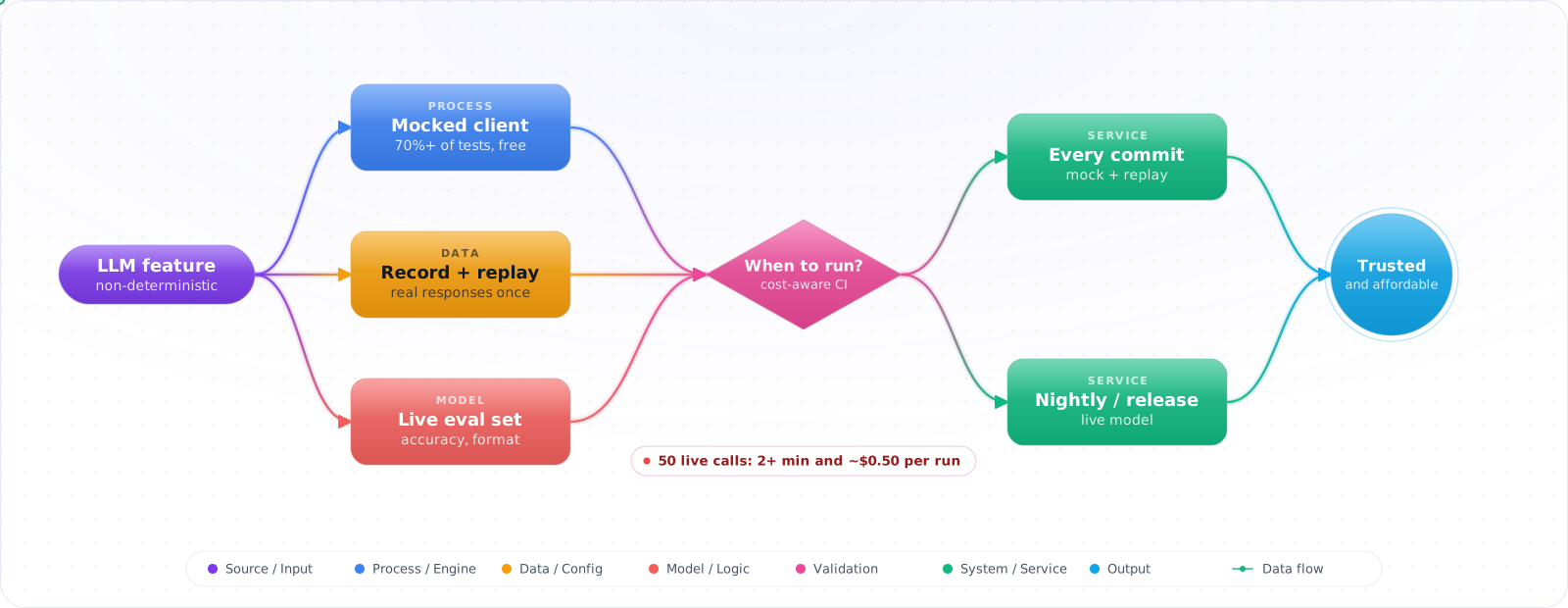
Testing LLM features in three layers: fast unit tests with a mocked client for most cases, snapshot tests that replay recorded responses, and live evaluation tests against the real model run only on a schedule to control cost.Testing LLM features in three layers: fast unit tests with a mocked client for most cases, snapshot tests that replay recorded responses, and live evaluation tests against the real model run only on a schedule to control cost.

Testing LLM-Powered Features Without Going Broke

Mock strategies, evaluation harnesses, snapshot testing, and cost-aware CI for LLM-integrated applications.

Updated 9 min
Read →
Prompt Engineering
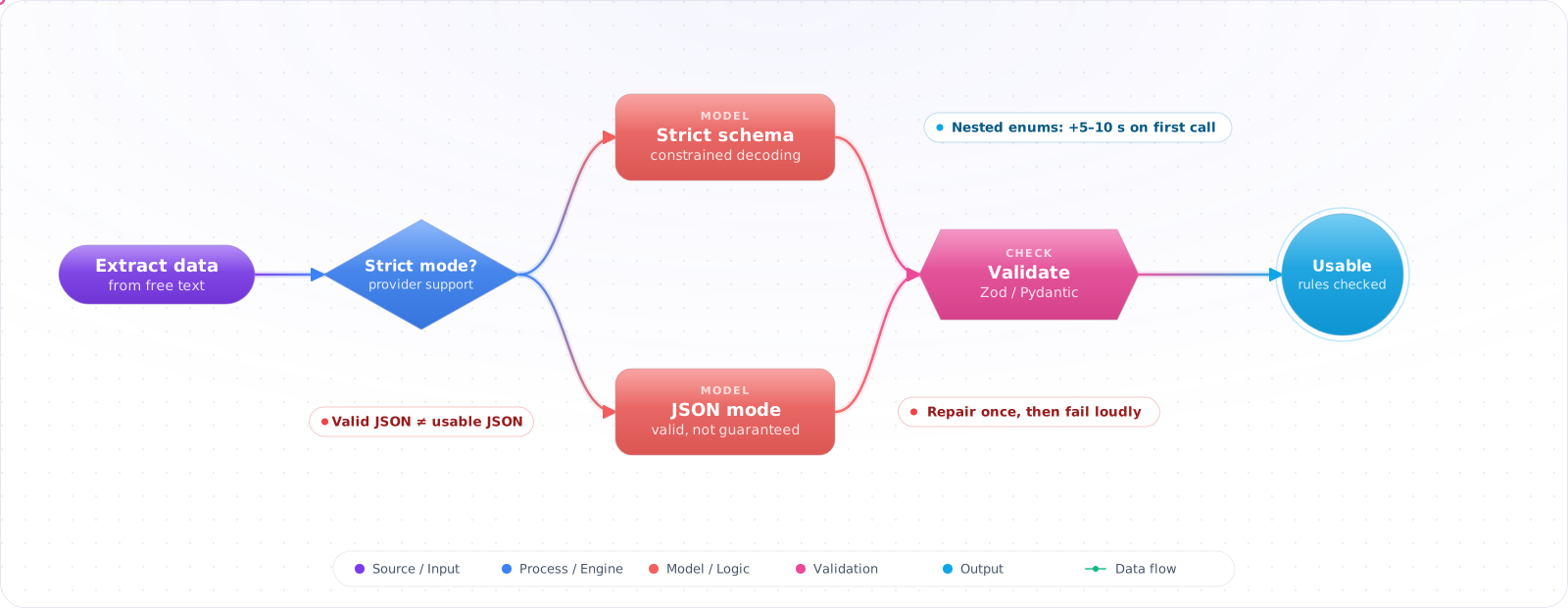
Getting usable structured data: strict schema mode where available, JSON mode plus validation elsewhere, a capped repair retry on failure, then business-rule checks before the data is used.Getting usable structured data: strict schema mode where available, JSON mode plus validation elsewhere, a capped repair retry on failure, then business-rule checks before the data is used.

Structured Outputs from LLMs: JSON Mode, Function Calling, and Schema Enforcement

Practical patterns for getting reliable structured data from LLMs — JSON mode, function calling, schema validation, and fallback strategies.

Updated 10 min
Read →
AI Engineering
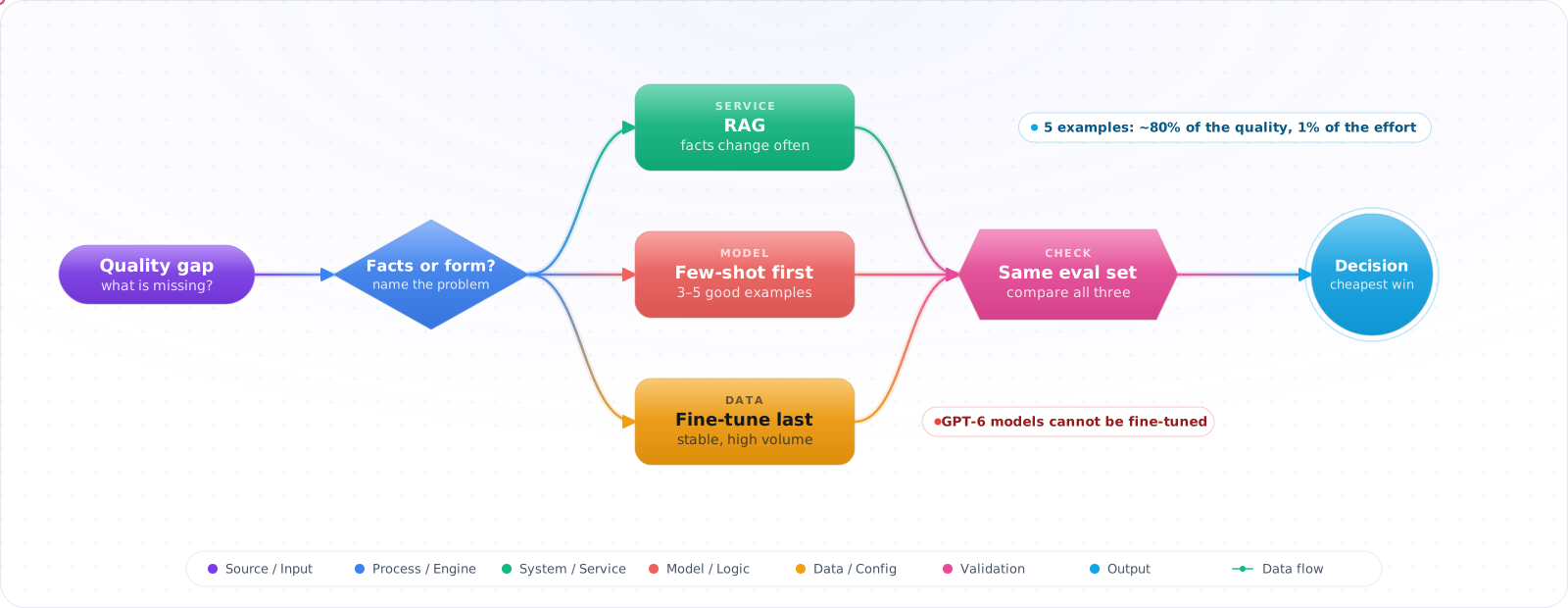
A decision flow: missing knowledge points to RAG, wrong format or style points to few-shot examples first, and only stable high-volume behaviour that prompting cannot fix points to fine-tuning on a model that still supports it.A decision flow: missing knowledge points to RAG, wrong format or style points to few-shot examples first, and only stable high-volume behaviour that prompting cannot fix points to fine-tuning on a model that still supports it.

When to Fine-Tune vs Few-Shot vs RAG

Intermediate

A decision framework for choosing between fine-tuning, few-shot prompting, and RAG for production LLM applications.

Updated 10 min
Read →
AI Observability
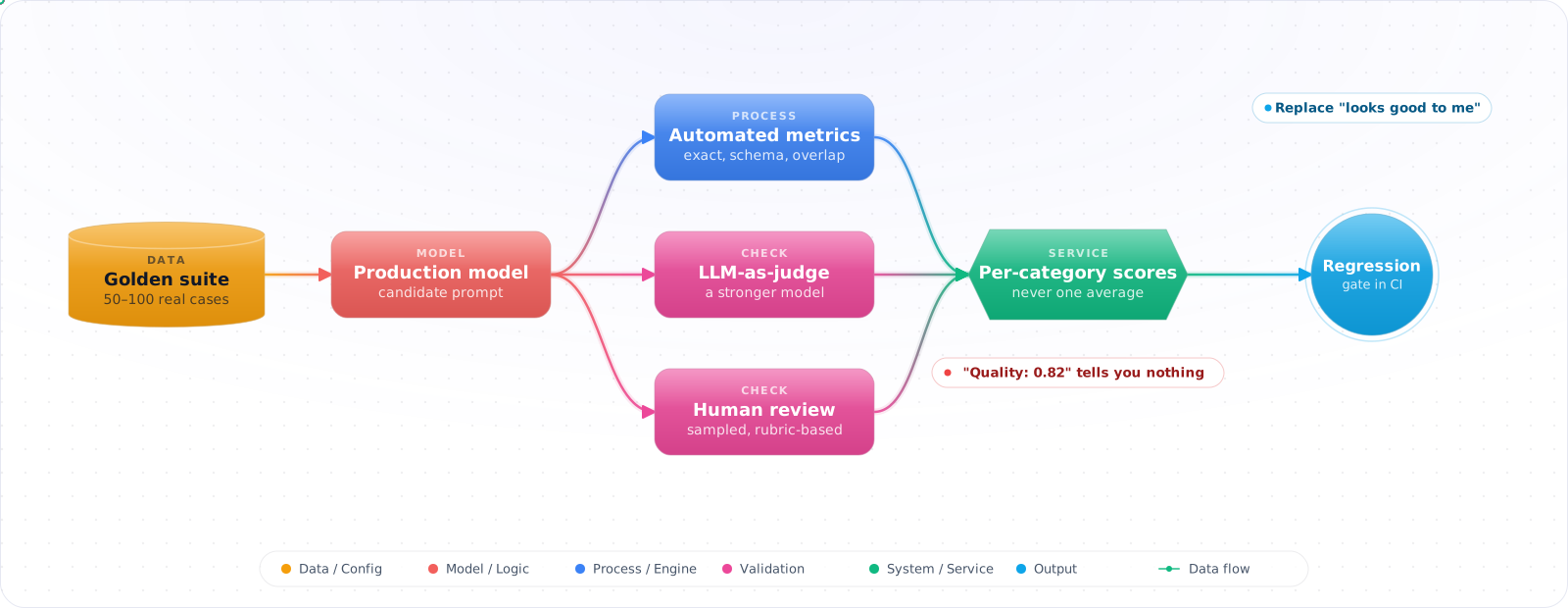
Model outputs from a 50 to 100 case golden suite are scored by automated metrics, an LLM judge and human review, broken down per category, and gated before release.Model outputs from a 50 to 100 case golden suite are scored by automated metrics, an LLM judge and human review, broken down per category, and gated before release.

LLM Evaluation Beyond Vibes

Systematic approaches to evaluating LLM outputs — automated metrics, human evaluation frameworks, regression testing, and building evaluation pipelines.

Updated 9 min
Read →
AI Engineering
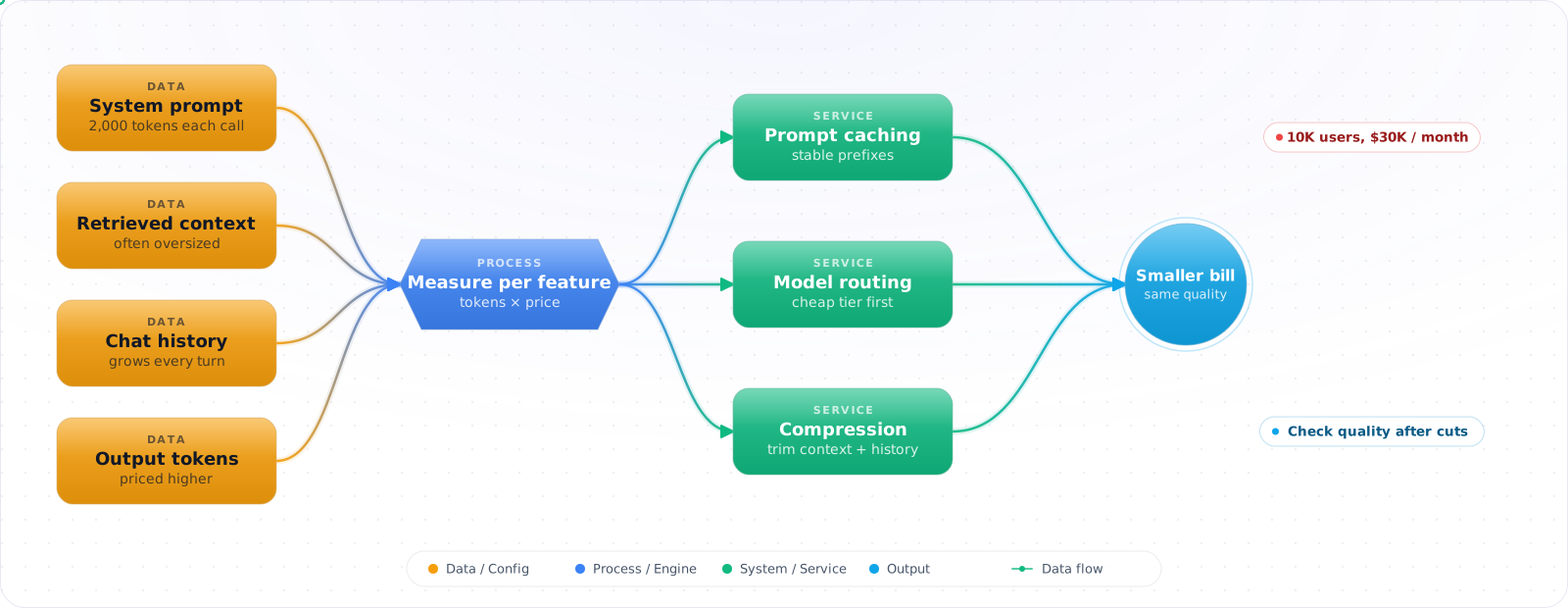
Where LLM tokens go: system prompt, retrieved context, history and output are measured per feature, then cut with prompt caching, compression and model routing, and checked so savings do not hurt quality.Where LLM tokens go: system prompt, retrieved context, history and output are measured per feature, then cut with prompt caching, compression and model routing, and checked so savings do not hurt quality.

Token Economics: Understanding and Optimizing LLM Costs

A practical guide to understanding token pricing, measuring real costs, and implementing optimization strategies — caching, prompt compression, model routing.
Updated 10 min
Read →
LLM Model Landscape
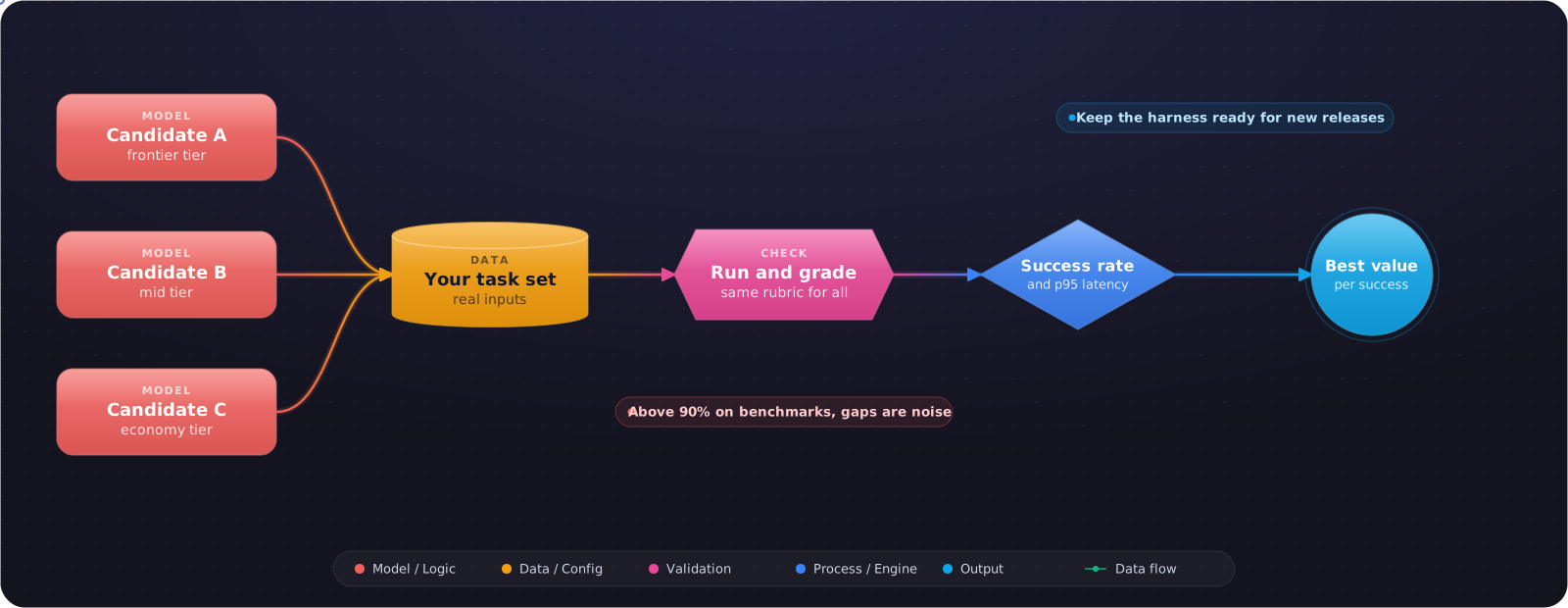
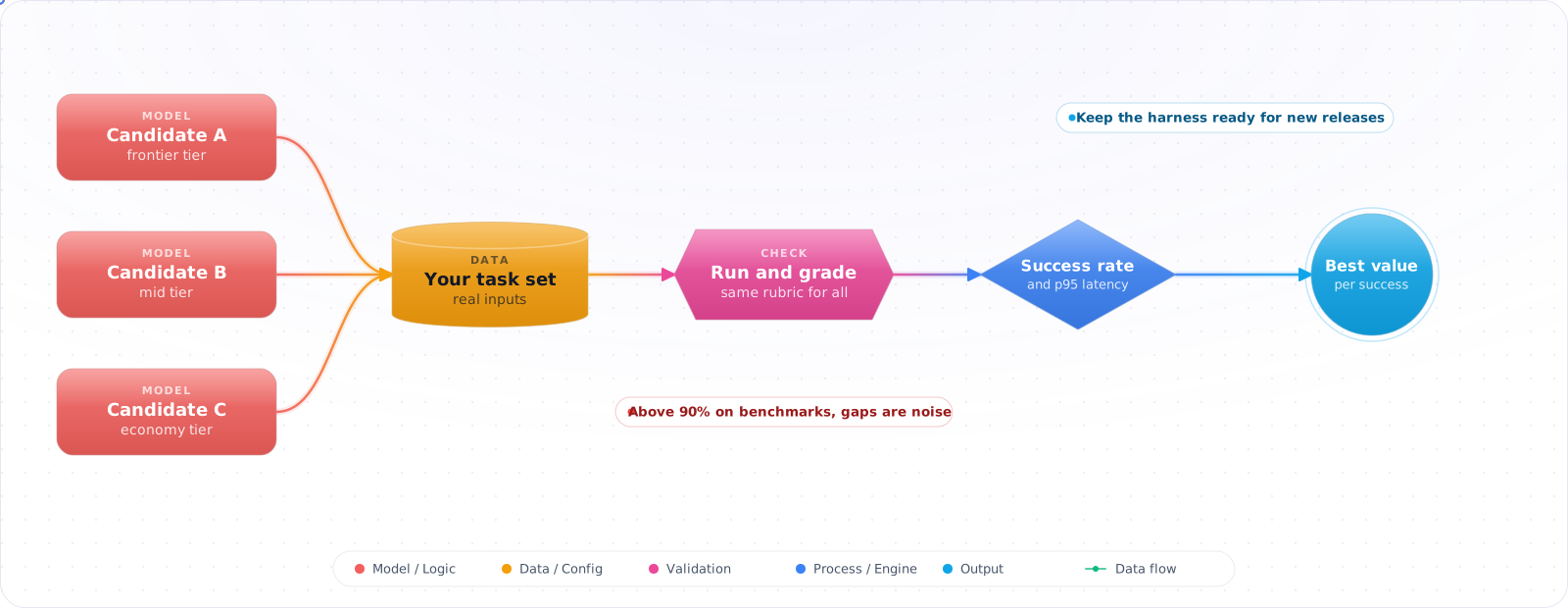
Candidate models run against your own task set, are graded, and are compared on cost per successful task rather than price per token.Candidate models run against your own task set, are graded, and are compared on cost per successful task rather than price per token.

Evals for Choosing a Model

Intermediate

Why public benchmarks do not transfer to your workload, how to build a model-selection eval, and why cost per successful task beats price per token.

Updated 10 min
Read →